
📞 Case Study – “From Furnace Inquiry to Follow-Up Ready: Building a Smarter First Call for Coral Home Comfort”
Live Voice Call with Tiffany, Coral Home Comfort’s AI Receptionist • Topic: New Furnace Estimate • Location: Kelowna • Service Type: Heating
“The Receptionist Workflow That Keeps Working When the Front Desk Can’t”
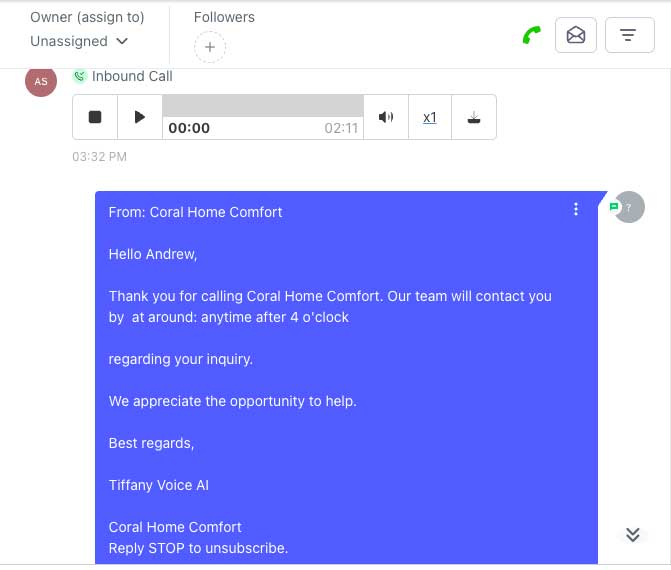
New System Estimate conversation. Press play to listen
The text message that the customer receives.
This case study began with a practical goal: make sure Coral Home Comfort never loses a promising new inquiry just because the receptionist is unavailable, already on another call, or the office is closed.
Steve liked the idea of having an AI receptionist step in after four rings or after hours, but for that to be truly useful, Tiffany needed to do more than just answer the phone. She needed to capture the right details, keep the caller engaged, and hand the inquiry over in a way the Coral team could actually use.
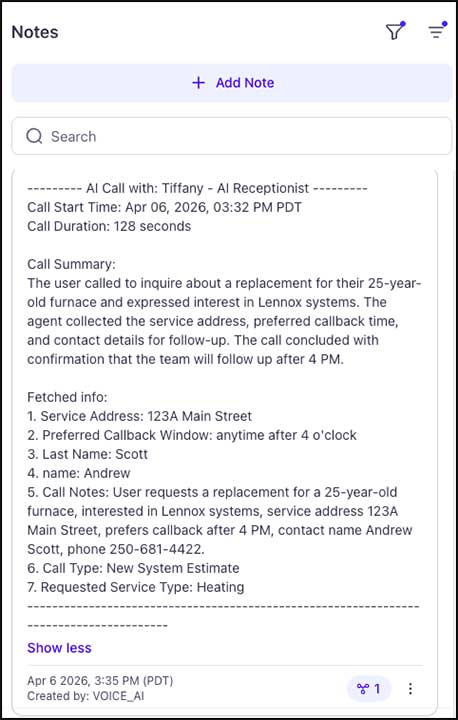
In this successful test, Tiffany handled a new furnace estimate inquiry in a natural, professional way. She identified the call as a New System Estimate and gathered the most important follow-up details, including the service address, requested service type, callback preference, callback window, and a clear summary of the caller’s needs.
That alone made the interaction more valuable than a missed call or a voicemail.
But the bigger improvement came in what happened next.
Instead of sending the caller a link to choose a time, the workflow was refined to support Coral’s real office process more closely. After the call, the customer received a clear confirmation text letting them know a Coral team member would contact them by their preferred method around the requested callback window. This created a smoother and more realistic handoff, while still giving the office full control over the next step.
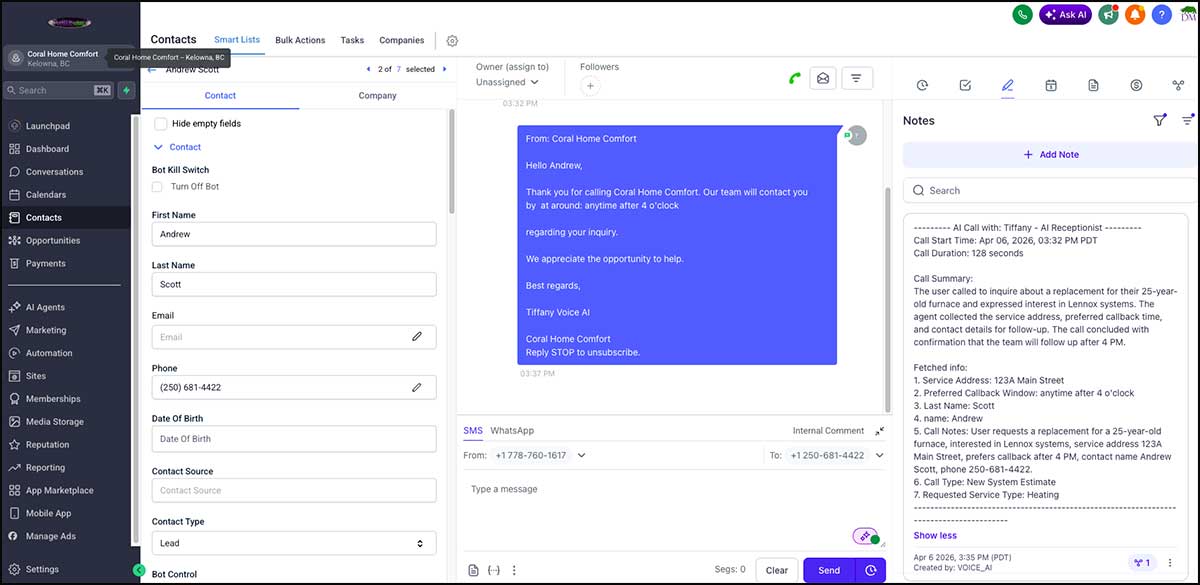
At the same time, the system routed the inquiry through the correct workflow branch, applied the proper estimate tag, and wrote structured details into the contact record so the Coral team had useful information ready to review. That meant the follow-up process started with context, not guesswork.
This is where the workflow became more than just a helpful AI conversation.
It became a dependable receptionist layer that supports Coral when the front desk is tied up, when calls go unanswered after four rings, and when new inquiries come in after hours. Instead of the opportunity going cold, Tiffany keeps the process moving until a member of the team can step in personally.
The result is a better experience on both sides. The caller feels acknowledged and guided, while the Coral office receives organized information that makes follow-up faster, clearer, and easier to manage.
What this case study demonstrates
- Capturing the right estimate details during the first call
- Correctly classifying the inquiry and routing it through the proper workflow branch
- Sending a callback confirmation SMS that supports Coral’s real follow-up process
- Creating a stronger internal handoff through structured contact fields and tagging
- Giving Coral a receptionist solution that still works after four rings and after business hours
This is a screenshot from the CRM (Customer Relationship Mamagement) software tool
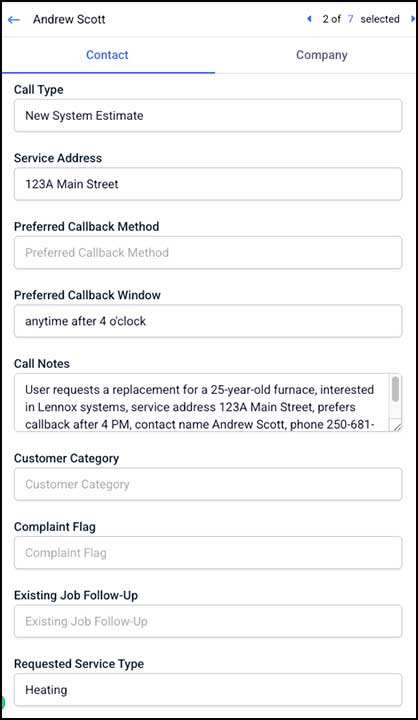
This is a another screenshot from the CRM (Customer Relationship Mamagement) software tool
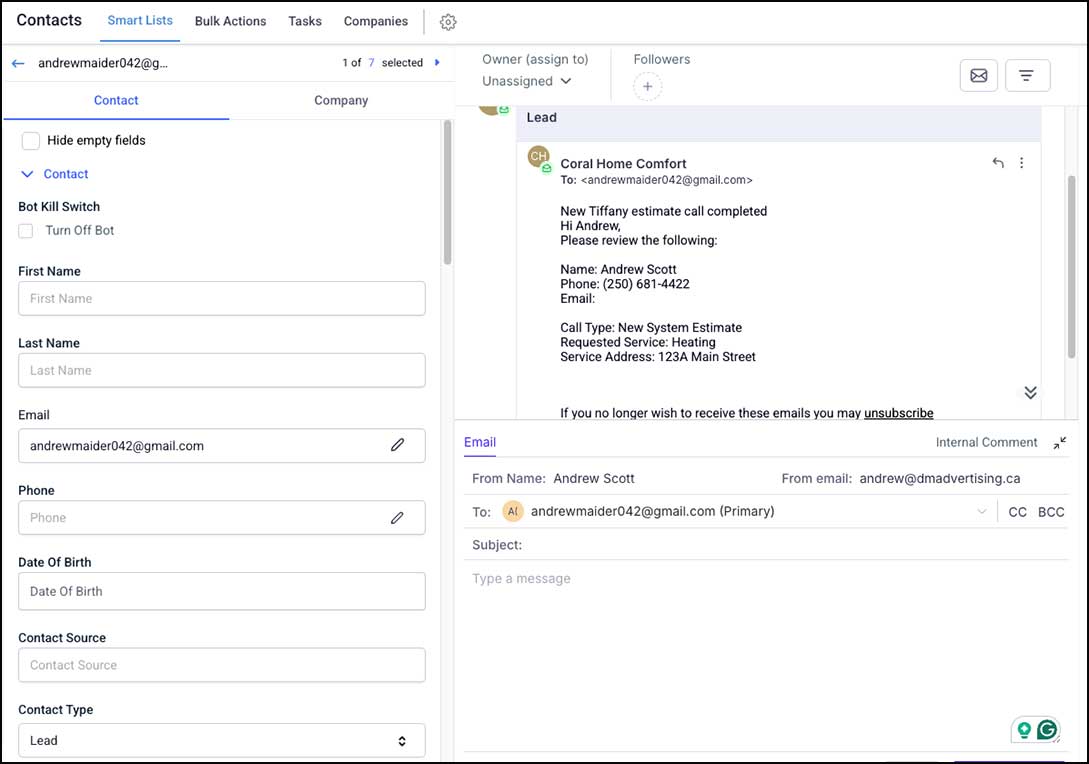
This is a screenshot of an email sent to an allocated recepient namely the person who is going to follow up on the lead. This internal notification can be either sent via text or email
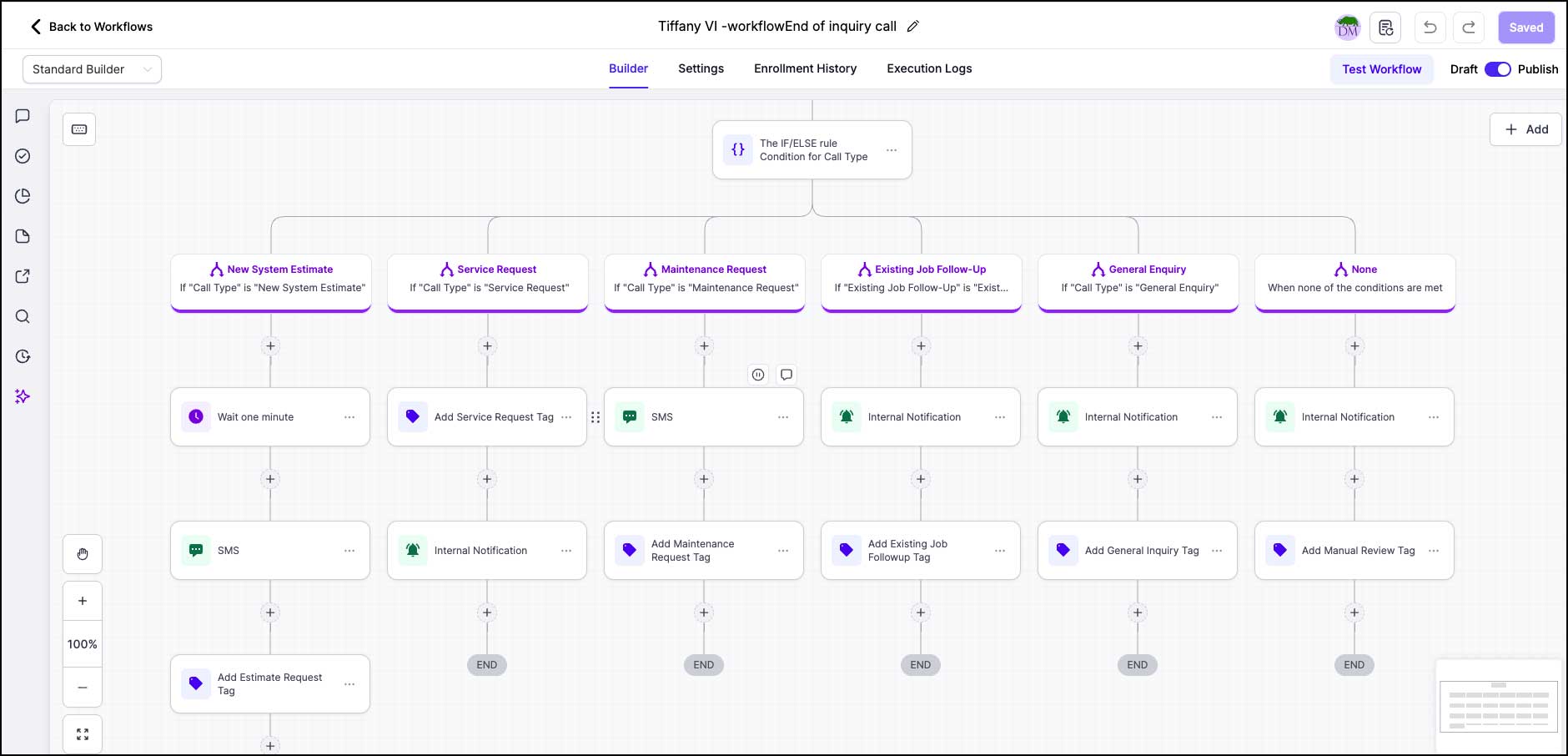
This is a partial screenshot of our workflow map that shows how Tiffany’s AI receptionist system sorts incoming calls into one of six possible paths based on the caller’s needs.
In this case study, we are focusing on just one branch — a New System Estimate — but Tiffany has been trained to recognize and route several different enquiry types so Coral Home Comfort can respond more efficiently, whether the call comes in during business hours, after four rings, or after the office is closed.
What This Workflow Is Showing
This flowchart is the decision-making structure behind Tiffany’s receptionist workflow. After a call is completed, the system reviews the information Tiffany collected and places the enquiry into the most appropriate category. Each category then triggers its own actions, such as sending a customer confirmation text, applying the correct tag, updating the contact record, or sending an internal notification for follow-up.
The case study on this page highlights just one of these six possible paths: New System Estimate. That is the branch used when a caller is asking about a new furnace, replacement heating system, or a fresh installation quote.
The 6 Call Conditions Tiffany Can Route
- 1. New System Estimate
For callers asking about a new furnace, air conditioner, heat pump, or other replacement / installation estimate. - 2. Service Request
For customers reporting a problem, breakdown, or repair need with an existing heating or cooling system. - 3. Maintenance Request
For routine servicing, tune-ups, seasonal maintenance, or preventative care appointments. - 4. Existing Job Follow-Up
For callers checking in on work already underway, previous visits, open quotes, or pending service items. - 5. General Enquiry
For broader questions that do not fit the main service categories, such as basic information about services, availability, or next steps. - 6. Manual Review / None of the Conditions Met
For unusual, unclear, or incomplete calls that do not confidently match the other categories, allowing Coral’s team to review them manually.
Why This Matters
This is what makes Tiffany more than just a voice answering the phone. She is not simply picking up calls — she is helping Coral organize enquiries in a practical way. Instead of every caller being treated the same, the system helps separate estimate opportunities from repairs, maintenance calls, follow-ups, and general questions.
That creates a better handoff for the office team and reduces the chances of missed context, vague notes, or slow follow-up. It also means the system can still keep things moving when the receptionist is unavailable after four rings or when a customer calls after hours.
In This Case Study
The example featured here followed the New System Estimate branch. Tiffany identified the enquiry correctly, captured the key details, sent the customer a callback confirmation text, and prepared the lead for follow-up inside the CRM.